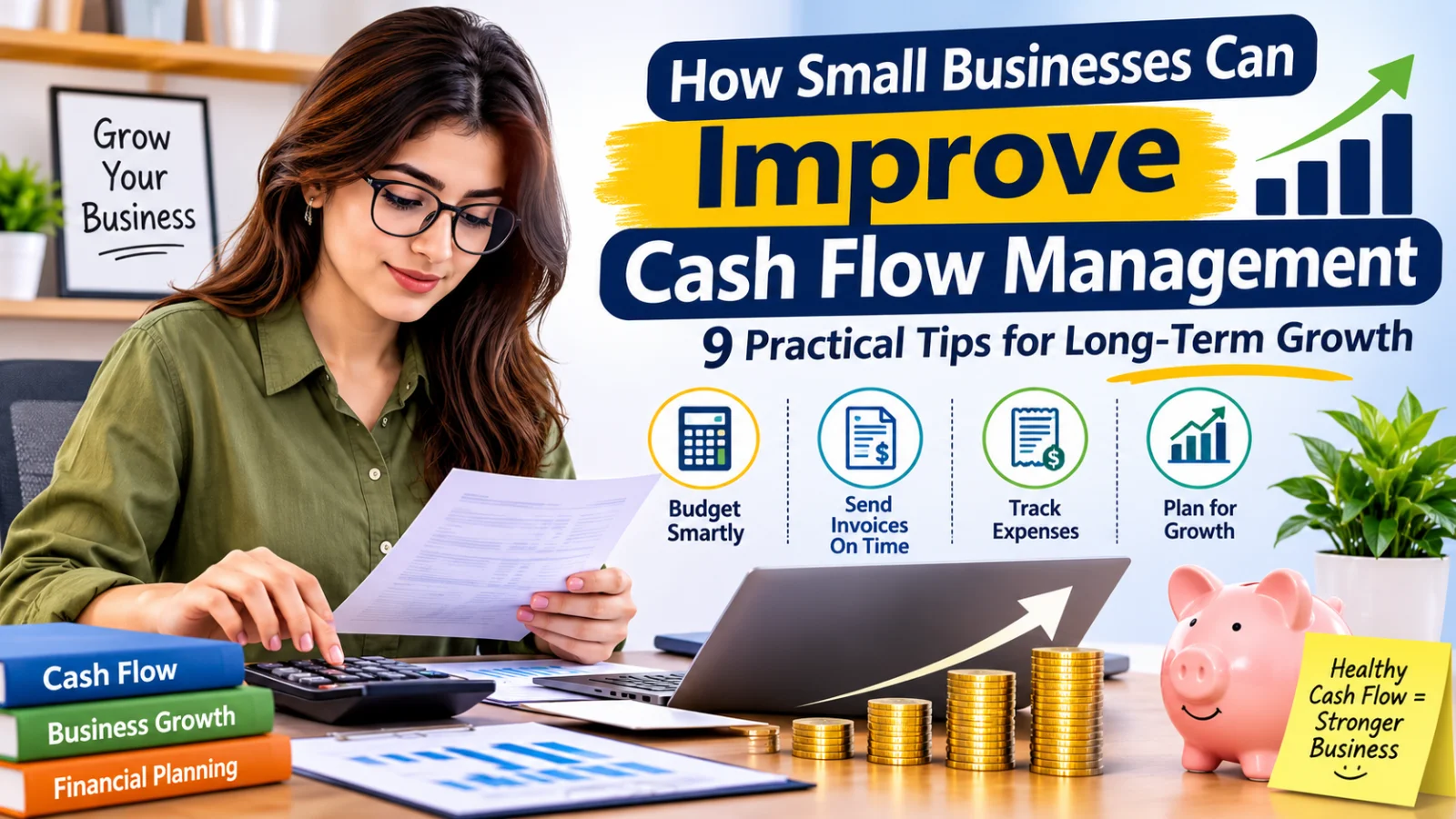
Cash Flow Management for Small Businesses
Picture a small print shop with a record month. Orders piling up, the machines running late into the evening. And the owner is still on the phone to her bank on the 28th, asking for a short loan so she can pay her staff. Nothing went wrong with sales. Three big clients just hadn’t paid yet, and their invoices were six weeks old.
I think this is the most misunderstood thing about running a business. Selling something and having the money are separate events, sometimes weeks apart, and your bills only care about the second one.
So what is cash flow, really?
Timing, mostly. Money comes in when customers pay you, or when you take a loan, or get some income on the side. It goes out for rent, wages, stock, the electricity bill, ads, whatever your suppliers charge. Nothing strange about any of that.
The trouble starts when the two don’t line up. A customer who pays in 60 days is no help when the rent is due on the 5th. If you take only one idea from this article, take that one.
Forecast, even if it’s rough
The word sounds heavy, but a forecast can live on one page of a notebook. Look at the last few months to see what came in and what left. Then add the stuff you already know about: a supplier payment next month, a slow stretch, the client who always pays late (you know the one).
A made-up month, just to show the shape:
Item Amount
Customer payments $8,000
Other income $1,000
Expenses $5,500
Left over $3,500
Use your own figures, obviously. What matters is that you go back to it. Lose a client, update it. Delivery van needs a new clutch, update it. If you write a forecast once and never open it again, it’s no better than not having one.
Send the invoice the same day
Finish a job on Tuesday, invoice on Friday, and you’ve given the client three free days with your money. It sounds small, but over a year with dozens of clients it isn’t.
On the invoice itself, put your details and theirs, an invoice number, the date, what you actually delivered, the amount, when it’s due, and how to pay. Write the terms plainly so nobody can claim they didn’t know. Then let your software send the reminders. People take an automatic email less personally than a phone call from you, and you don’t have to feel awkward either.
The small leaks
Nobody forgets a $5,000 purchase. It’s the $12 and the $30 that disappear, like the tool the team stopped using last year that still bills every month. Add those up and it’s easily a few hundred dollars gone.
So sit down one evening with your last three months of bank statements. Anything you can’t explain, cancel. You’ll feel slightly silly at what you find.
Other habits worth building: get a couple of quotes before buying anything big. Be wary of bulk discounts, because 10% off means nothing when the boxes sit in the back room for eight months with your cash inside. Keep personal spending out of the business account, since mixing them makes every number doubtful. And record expenses as they happen. I like Zoho Books for this, though any decent app will do. It’s far better than a shoebox of receipts on the last day of the month.
Keep some money aside
Something always breaks eventually. A client disappears, or a quiet season drags on longer than you planned. A bit of savings turns that from a crisis into a bad week.
You don’t need a huge pile on day one. Move a small amount aside each month after the essentials are covered, and let it grow. How big it should get depends on your fixed costs and how predictable your income is. If three clients pay most of your bills, you want a much bigger cushion than a shop with hundreds of small customers.
Stock is cash that you can’t spend
If you sell goods, every unsold item on the shelf is money you can’t use for anything else. Too much stock chokes your budget. Too little and customers go to someone else.
Figure out what sells quickly and what just sits there. Count more than once a year, because annual counts only tell you about problems after they’ve cost you. Check past sales before you reorder, and for your best sellers, pick a level at which you automatically restock.
When the spreadsheet gets out of hand
Spreadsheets are great at the start. Then one day you’re opening three files to find out if a client paid, and you can’t remember which one is current.
That’s when accounting software starts to make sense. You want it to send invoices, track who has paid, log expenses, match your bank transactions and show how much cash you have today. Zoho Books does that, as do several others. Pick one that fits where your business is now, not where you hope it will be in five years. Extra features you never open are just one more leak.
Read your numbers monthly
A lot of owners only look at their financials when the tax deadline forces them to. It’s a bit like checking the fuel gauge after the car has already stopped.
Once a month, open three reports. The cash flow statement shows where money moved. The profit and loss statement compares what you earned with what you spent. The balance sheet is a snapshot of what you own and what you owe on a given day. Ten minutes with these each month and you’ll notice trouble while it’s still cheap to fix.
Know your seasons
Almost every business has quiet months and rushed ones. A clothing shop is chaos before festivals and dead in the weeks after. A consultant might disappear for the summer.
Check last year’s sales and you’ll see where the dips fell. Put some of the money from busy months aside for the slow ones, and don’t spend on stock and advertising at the same rate all year.
A few quick questions
What is cash flow management?
Keeping an eye on what comes in and goes out, so you can pay what’s due and still have something left for growth.
Why does it matter for small businesses?
Rent, wages and suppliers want paying on fixed dates, whether or not your own customers have paid. Savings give you room when something unexpected lands.
How do I improve it quickly?
Send any invoices still sitting unsent. Chase the overdue ones. Cancel what you don’t use. If suppliers are willing, ask for longer terms.
What’s a forecast?
A rough estimate of money you expect to receive and spend over the next few weeks or months, so a shortfall doesn’t catch you off guard.
Is accounting software worth it?
Most of the time, yes. It saves you from guessing where you stand.
How often should I check?
Monthly at the least. If sales swing a lot or money is tight, weekly.
One last thing
None of this is clever. Look ahead, invoice fast, find the leaks, read the reports. Do it for a few months and surprises stop feeling like emergencies.


Conversation 0
Connecting…No comments yet. Start the conversation.