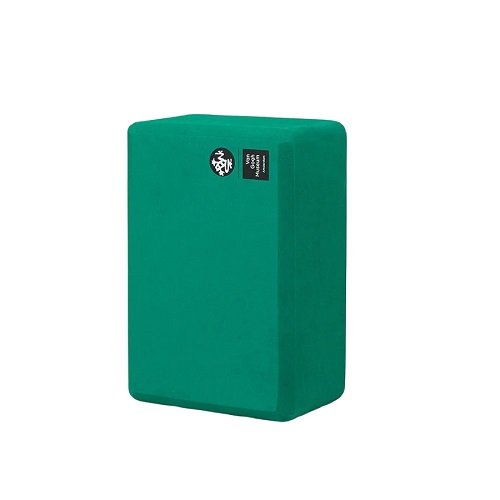
Yoga blocks are props used in yoga practice to help practitioners modify, deepen, or support their postures. They are typically made of foam, cork, or wood and come in different sizes and shapes, such as rectangular, square, or cylindrical.
Yoga blocks can be used in a variety of ways, such as:
Providing support: Blocks can be used to support the body in postures where the hands do not reach the floor or the body needs extra support. For example, in Trikonasana (Triangle Pose), a block can be placed on the floor to support the hand of the bottom arm.

Modifying postures: Blocks can be used to modify postures by reducing the distance between the body and the floor. For example, in Ustrasana (Camel Pose), a block can be placed between the heels to reduce the strain on the lower back.

Deepening postures: Blocks can also be used to deepen postures by increasing the distance between the body and the floor. For example, in Paschimottanasana (Seated Forward Bend), a block can be placed on the feet to allow the practitioner to fold deeper.
Yoga blocks can be a helpful tool for both beginners and experienced practitioners, allowing for greater accessibility and exploration in their yoga practice.
Yoga blocks are versatile props that can be used in a variety of ways to support, modify, or deepen yoga postures. Here are some common uses of yoga blocks in yoga practice:
Supporting postures: Yoga blocks can be used to support the body in postures where the hands do not reach the floor or the body needs extra support. For example, in Utthita Trikonasana (Extended Triangle Pose), a block can be placed on the floor to support the hand of the bottom arm.

Improving alignment: Blocks can be used to improve alignment in postures by providing feedback and support. For example, in Adho Mukha Svanasana (Downward-Facing Dog Pose), a block can be placed between the thighs to encourage proper alignment of the legs and pelvis.

Restorative postures: Yoga blocks can be used in restorative postures to provide support and comfort. For example, in Supta Baddha Konasana (Reclining Bound Angle Pose), a block can be placed under the back or head to provide support and help the practitioner relax more deeply.
Overall, yoga blocks can be a useful tool for practitioners of all levels to improve their alignment, deepen their practice, and make postures more accessible.
The durability of yoga blocks can vary depending on the quality of the materials used and how well they are cared for. Most yoga blocks are made of foam, cork, or wood.
Foam blocks are generally the least expensive and most lightweight option. They are durable and can withstand regular use, but may compress over time and lose their shape. However, high-density foam blocks can be more durable and long-lasting.
Cork blocks are a popular option for their natural, eco-friendly material and their durability. They are dense and can provide strong support, and can last for many years if well-maintained. Cork blocks may also be more slip-resistant than foam blocks, making them a good choice for certain postures.
Wooden blocks are also a durable option, but may be heavier and less portable than foam or cork blocks. They are usually made from sustainable hardwoods and can provide a stable base for postures. Wooden blocks may also develop a natural patina over time, adding to their aesthetic appeal.
To ensure the durability of yoga blocks, it is important to store them properly in a dry, cool place and avoid exposing them to excessive heat or moisture. It is also important to clean them regularly, especially after use in hot yoga classes where they may absorb sweat and bacteria. By following proper care and maintenance, yoga blocks can last for many years of regular use.
Visit KATA and ASANA website for shopping online at https://kataandasana.com/collections/blocks
Our Location
NOW OPEN! KATA | ASANA
Kata And Asana, 1st Floor, Time Square Center
Sheikh Zayed Road, Dubai , U.A.E.
Email : info@kataandasana.com
Mobile: +971506389447
Tel.: +97143555251

Conversation 0
Connecting…No comments yet. Start the conversation.