Women in the Science, Engineering and Technology, Their Impact on Ideas of Gender
Traditionally, Information Technology (IT), science, and engineering are considered "male" spheres, but modern society is closer and closer to gender equality…
Upstart Blogger · 9 min read · 1.3k reads
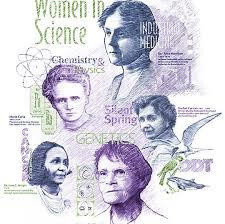
Traditionally, Information Technology (IT), science, and engineering are considered "male" spheres, but modern society is closer and closer to gender equality. Recently, the gender did not give opportunities for safe and secure work and development for women. Marie Sklodowska-Curie, as well as first female cosmonauts, pilots and engineers, probably faced the manifestations of men's denial of their merits and scornfully condescending attitude. Men came to IT due to women and not vice versa. Ada Lovelace August, the mathematician, invented the binary code. She wrote the first program and introduced key concepts of programming such as the cycle and the working cell. The famous astronomer and mathematician Mary Somerville, the author of Relationship of Physical Sciences where the word ‘scientist’ first appeared in the survey, used to be her teacher. Despite all the obstacles and attitude, women have enriched science and IT with their discoveries and inventions that affected their gender role and ideas. This paper explores facts about women's achievements in science and technology as well as their role in the ideas of gender that report on result from research based on official The National Science Foundation (NSF) website, statistical reports, different additional online and offline sources. Some information about the biography of famous women in those areas, their inventions, and their impact on world opinion is explored as well. So, it is high time to write inventors and inventions essay.
Discrimination against women in science has many faces. It can occur at different stages of the scientific career of a woman: when applying for a job, during admission to a university, in the assessment of her creative contribution to science, the formation of the team of co-authors of scientific publications, and others.
Not many people know to whom the actual opening of DNA belongs. This honor belongs to the English biophysicist, a modest Englishwoman, Rosalind Franklin (1920-1958). For a long time, her merits were in the shadow, but the achievements of her colleagues James Watson and Francis Crick were well known. However, Franklin’s exact laboratory experiments when the X-ray image of DNA received by Rosalind showed its winding structure, turned out rather meaningful. Only Franklin's work allowed taking that discovery to the logical end. In 1962, male scientists received the Nobel Prize for their discovery, but Franklin had died from cancer four years before. Rosalind Franklin did not reach the triumph, and it is known that this prestigious award is not awarded posthumously.
In 1926, Lise Meitner (1878-1968) managed to become the first female professor in Germany, having been awarded this title at the Berlin University. In 1930, she worked on the creation of transuranic elements, and in 1939, she was able to explain the splitting of atomic nuclei, six years before the atomic bombings of Japan. Meitner, together with her colleague Otto Hahn, conducted a study, proving the possibility of splitting nuclei with a large amount of energy. However, the results of experiments failed to develop because of the difficult political situation in Germany. Meitner fled to Stockholm, refusing to cooperate with America in the creation of new weapons. In 1944, Otto Hahn received the Nobel Prize for the opening of nuclear fission. Element of the periodic table number 109 was named in honor of the famous female scientist.
Geeks all over the world find this woman one of the founders of their world. Love for science Augusta Ada Lovelace inherited from her mother. At the beginning of her IT career, Lovelace met Charles Babbage who was a professor of Cambridge and who had developed the first computer. However, the scientist did not have enough money for its creation. Nevertheless, Ada, after becoming the wife of Lord Lovelace, enthusiastically gave herself into science, considering it her true vocation. In the book co-authored with Betty Toole, where she had described her life, Lovelace explained how she studied Babbage machine, describing particular algorithms for calculating Bernoulli numbers on it. In fact, it was the first program that could be implemented on the Babbage machine, a huge calculator. Betty Toole wrote about Ada’s huge contribution for future developing of IT sphere:
She picked the perfect program to show the power of this new engine and then she saw that the nature of the machine itself would change how information was processed, that it could compose music, that it could do graphics and that it could show science in ways that we never, ever could conceive of.
During Ada Lovelace’s life, the machine was never built, but she entered the history as the first female programmer.
If female scientists receive less social recognition than their male counterparts with whom they jointly carry out the research, the situation with the wives who have worked with their husbands is even worse. In some cases, women themselves consciously retreated into the background to support the scientific authority of their husbands. For example, a physicist Hertha Ayrton conducted a research with her husband, also a physicist, and she published the work under his name after he was ill. Nevertheless, she did not want to leave science. In the couple of biochemists Hertha and Carl Cori, received the Nobel Prize (1947) for the discovery of catalytic glycogen metabolism, namely Gert Corey, on memoirs of their colleagues, was a more gifted scientist, but she had never emphasized her role. The researcher, Isabelle Charles, conducted joint research with her husband Jerome Charles for almost fifty years, but did not get the Nobel Prize with him in 1985. It should be noted that George Charles shared the award with his German colleague and co-author A. Hauptmann. Sometimes, a curious fact arises - marriage unwittingly becomes a factor in eliminating a strong rival in the fight for scientific recognition. Something similar happened to G. Wald and R. Hubbard. Hubbard independently conducted a successful research on the biochemistry of vision back in the 1950s, but after 1960, she married Wald who had he worked on the same scientific problems. In 1967, he received the Nobel Prize and Hubbard’s earliest independent scientific works had been retrospectively attributed to her husband or their later scientific cooperation. Maria Winkelmann, a prominent German astronomer of the XVII century, was forced to ascribe to her husband the discovery of a comet because it was the only way it would have accepted by men scientists.
The list of similar examples could be extended, but most importantly, the problem of discrimination against women is systematic and deeply rooted in the scientific nature of society. The constant underestimation of the contribution of women to science even nowadays presents current research interest.
The old statement in the culture of science and technology says that the status, opportunities, and rewards depend on personal merits. History shows that some women’s works have been taken because of their necessity or originality. However, experiments still point to gender inequality of women in this area that harms them to receive the necessary benefits and opportunities. In the intense competition for academic standing, even small differences in advantage can accumulate over the span of a career and create large differences in status and prestige. That results in white men scientists and engineers often receiving greater rewards for their accomplishments than women or minority-group members.
Reaching women in the science and engineering (S&E) also became one of the causes of born of the feminism current in the Middle Ages. Feminism is a very broad concept, but it is based on the desire of women to be equal with men, what women scientists and inventors have been trying to prove on an intellectual level. It also confirms Jim Flynn’s publication in 2012 of the results of the research team of scientists from New Zealand. Previously, women lagged behind men in intellectual development; experts say, but in recent years, this gap has disappeared. There may be several explanations of this fact. Women are able to adapt to some changes easier, than men. Women have to combine family and career, as well as complex and rich life contributes to the active development of the brain. The New Zealander is sure that his results are so revolutionary that their refinement and additions require new studies. Scientists have already announced plans to write a book on the topic of how women have caught up and surpassed men in intellectual development. As an example, some unjust thing in the scientific world comes the story of Harvard University President Lawrence Summers that happened in 2005. Speaking at an international conference on the topic “Women in Science”, Summers allowed himself to declare that women could not make significant progress in the natural sciences not because of social inequality, but because of genetic differences from men. Female scientists who were present at the presentation left the hall demonstratively. The next day, Summers publicly apologized and explained that he had been misunderstood. However, this and subsequent apology did not help to remedy the situation. Less than a year after the unsuccessful performance, Summers was forced to resign. Summers' resignation was a forced measure, and in fact, men scientists are still contemptuous of intellectual abilities of women.
Perhaps, women make lifestyle choices that lead them away from leadership positions. In a real-world setting, when any number of variables can contribute to an outcome, it is essentially impossible to take them apart and pinpoint what is causative. As for statistics, in the science and engineering (S&E) workforce of women who complete education in areas for last thirty years has increased significantly. The best way to ascertain the gender bias is to conduct research in an environment where men and women have equal rights. University works best for this. This is exactly that was done and published in PNAS by Corinne Moss-Racusin, who compared competence, heritability, and mentoring of male and female Yale’s university students. Results found that the “female” applicants were rated significantly lower than the “males” in competence, heritability, and whether the scientist would be willing to mentor the student. They also offered the statistic of the lowest starting salaries for students.
Often, when it comes to the topic of women in science, there is a person who seeks to prove that sexism does not exist. They will argue differently and merge when one emphasizes even minimal discrimination. These people are wrong. These data show that they are wrong. Nevertheless, women's presence has grown across the sciences. In the life sciences, women now outnumber men in both undergraduate and graduate programs. According to the report, there are one-third of female candidates among the leading chemical departments, 25% of astronomy and physics, more than a quarter of in mathematics and statistics. Although, the technique is dominated by men, women are 20% of under and graduate students. The employment in S&E represents that in different racial and ethnic groups, more men than women work in S&E occupations. White men constitute about one-half of the S&E workforce, in all racial and ethnic groups, more men than women work in S&E occupations. Asian and underrepresented groups of women represent about one in ten persons employed in S&E occupations together.
Nowadays, the number of women in the IT sector has increased, indicating a recovery of the psychological climate in the society. Different initiatives help female workers to find their place in IT, but everything is good in moderation. The most vivid and top personalities have always formed in hard times. Now the main thing is not to overdo it and do not slip into a fanatical feminist, demanding women have an equal place, but without any of the exclusive rights. Because anyone would certainly want one’s daughter to be raised in the world in which she can achieve everything, but not where a crowd of women starts running after a man when he says something they consider a ‘bad’ joke. In this world, thousands of teen-fundamentalists can threaten to kill a woman just because that she learned to read and write, and requires the same rights for their compatriots. Not living in such a world is what famous women scientists and technicians have been trying to reach, and it is important and right to fight for that.
- science
- women
.jpg)
.jpg)
.jpg)
Conversation 0
Connecting…No comments yet. Start the conversation.